Introduction
The modern ecommerce customer doesn’t just want fast delivery.
They want to know- right now - if it’s possible.
The decision to buy often happens before checkout.
It happens on the Product Detail Page (PDP).
Shipsi’s new PDP Same-Day Delivery Eligibility feature brings delivery urgency directly into the moment of decision, where emotionally driven shopping behavior is at its peak.
The Problem: Delivery Information Comes Too Late
Traditionally, delivery options are revealed:
- At checkout
- After items are added to cart
- Or worse, after purchase
By then, the moment of excitement had already passed. Customers want clarity before they commit. A customer who doesn’t know what’s possible can’t fully commit. They hesitate, compare alternatives, or leave altogether.
This is often misread as a pricing issue, a UX issue, or a conversion problem. In reality, it’s a mismatch between what the business can do and what the customer is shown when they’re ready to decide.
Why PDP Matters More Than Ever
The product detail page is where intent forms.
It’s where customers compare options, evaluate tradeoffs, and decide whether the purchase makes sense. It’s also where they begin to imagine the product in their hands.
Adding real-time delivery eligibility at this stage:
- Reduces uncertainty
- Increases urgency
- Drives faster decisions
When timing is unclear, the decision becomes abstract. When timing is concrete, the decision becomes real.
What PDP Same-Day Eligibility Does
When delivery eligibility is surfaced on the PDP, the buying process becomes more direct. Shipsi enables brands to:
- Display real-time same-day delivery eligibility on PDPs
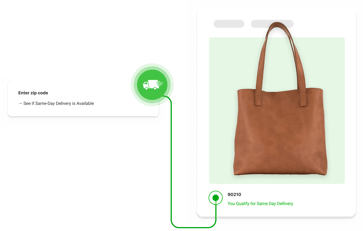
- Allow customers to enter their zip code and instantly see availability
- Reflect eligibility in both PDP and cart experiences
- Connect inventory, location, and delivery capability in real time
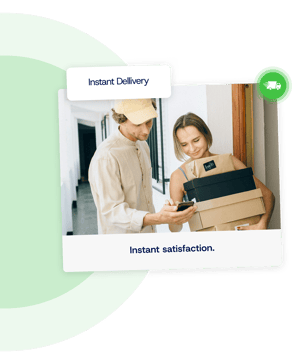
This means customers know before checkout whether instant gratification is possible.
The impact is straightforward. Less uncertainty leads to faster decisions. Faster decisions lead to higher conversion. Not because anything about the product changed, but because the customer had the information they needed at the right moment.
 Connecting the Promise to Reality
Emotional shopping thrives on immediacy. Customers can enter their location and immediately see whether a specific item, in a specific size or color, is available for same-day delivery. The promise on the page reflects what can actually happen in the real world.
That alignment is what drives the change in behavior.
They’re far more likely to:
- Add to cart
- Complete checkout
- Choose same-day delivery
Real-World Example: Frank & Eileen
Frank & Eileen will launch this feature for their NYC flagship.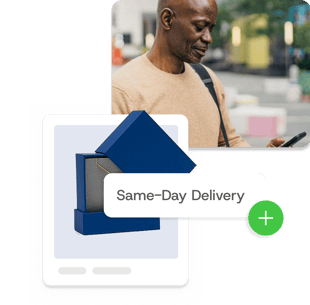
Customers shopping online can:
- Enter their zip code
- See if a specific item, size, and color is available for same-day delivery
- Experience instant gratification tied directly to local inventory
This is where ecommerce meets real-world fulfillment, allowing the purchase to be immediate when the outcome is clear.
Shipping as a Conversion Tool
PDP same-day eligibility doesn’t just improve delivery speed.
It:
- Increases same-day adoption
- Boosts conversion rates
- Turns shipping into a sales driver
When delivery is only introduced at checkout, it acts as a constraint. When it’s introduced earlier, it becomes part of the decision itself.
That doesn’t just increase adoption of faster options. It changes how customers evaluate the purchase in the first place.

The Takeaway
The faster a customer understands what’s possible, the easier it is to decide. Bringing delivery eligibility into the product page doesn’t change the underlying logistics. It changes how clearly those capabilities are communicated at the moment they matter.
That’s where demand is created, and where it’s often lost.